


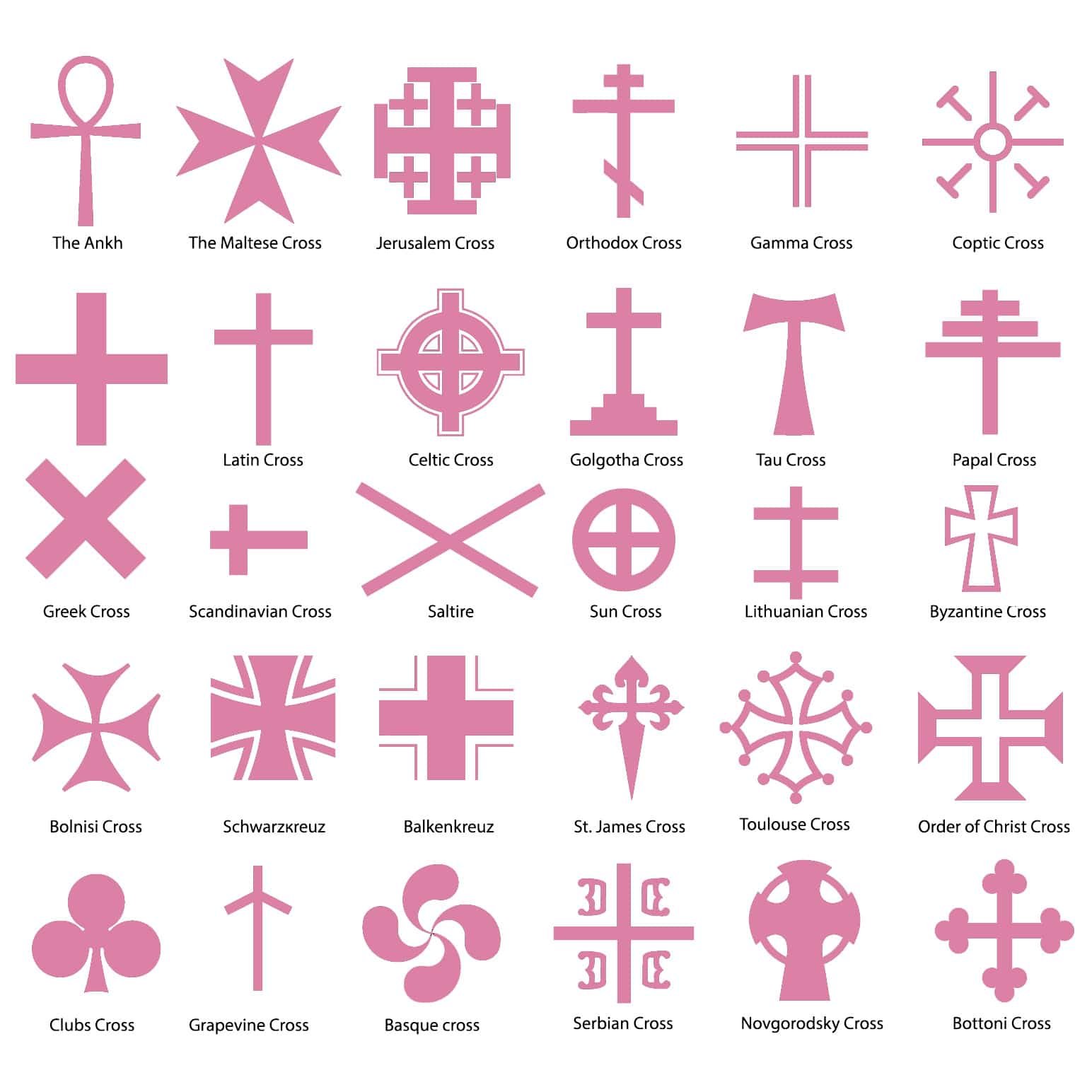
Looking to explore the diverse world of types of crosses? From the intricate Celtic cross to the ornate Maltese cross, these symbols hold deep historical and cultural significance. Each cross design tells a unique story, reflecting various beliefs and traditions. Ready to dive into the fascinating realm of types of crosses and uncover their hidden meanings? Join us on this enlightening journey of exploration.

Exploring the Wonderful World of Types of Crosses
Welcome, young explorers, to a fascinating journey into the world of crosses! You may have seen crosses in various places – on necklaces, in churches, or even as road signs. But did you know that there are many different types of crosses out there, each with its own unique history and meaning? Let’s dive in and discover the diverse array of crosses that exist.
The Traditional Latin Cross
The Latin cross is perhaps the most well-known and widely recognized type of cross. It consists of a vertical line intersected by a shorter horizontal line near the top. This cross is used as a symbol of Christianity and represents the crucifixion of Jesus Christ. It is a powerful symbol of faith and sacrifice for many believers around the world.
The Greek Cross
Another common type of cross is the Greek cross, which has four equal arms that intersect at right angles. This cross is often associated with the Eastern Orthodox Church and is a symbol of the spread of Christianity throughout the world. The symmetry of the Greek cross represents balance and harmony.
The Celtic Cross
The Celtic cross is a unique and intricate design that originated in the early Middle Ages in the British Isles. It combines the traditional Christian cross with a circle around the intersection of the arms. The circle symbolizes eternity and the endless love of God. The intricate knotwork often found in Celtic crosses represents the interconnectedness of all things.
The Ankh
One of the oldest symbols of life and immortality is the Ankh, an ancient Egyptian hieroglyph that resembles a cross with a loop at the top. The loop of the Ankh represents the eternal life force that flows through all living beings. It is a powerful symbol of regeneration and rebirth.
The Russian Orthodox Cross
The Russian Orthodox Cross, also known as the Eastern cross, has a unique design with two horizontal crossbars. The top bar represents the sign that Pilate placed on Jesus’ cross, which proclaimed Him as the King of the Jews. The lower bar symbolizes the footrest of the crucified Christ. This cross is a powerful symbol of victory over death and redemption.
The Jerusalem Cross
The Jerusalem Cross, also known as the Crusader’s Cross, features a large cross in the center with four smaller crosses in each quadrant. This cross symbolizes the spread of Christianity from Jerusalem to the four corners of the earth. Each smaller cross represents one of the four Gospels – Matthew, Mark, Luke, and John.
The St. Brigid’s Cross
St. Brigid’s Cross is a traditional Irish cross made from rushes or straw. Legend has it that St. Brigid wove this cross to explain the story of Jesus to a dying pagan chieftain. The cross has four arms that are tied or woven together at the ends, forming a unique square shape. It is a symbol of protection and is often hung in homes to ward off evil.
The Budded Cross
The Budded Cross, also known as the Apostles’ Cross, features three circles or buds at the end of each cross arm. These buds represent the twelve apostles of Jesus Christ. The Budded Cross symbolizes the spreading of the teachings of the apostles throughout the world.
The Tau Cross
The Tau Cross is shaped like the letter “T” and is named after the Greek letter tau. This cross is associated with the Franciscan Order and is often seen as a symbol of humility and service. St. Francis of Assisi used the Tau Cross as his signature, emphasizing simplicity and devotion to God.
As we have explored the different types of crosses, we have discovered the rich symbolism and meanings behind each design. From the traditional Latin Cross to the intricate Celtic Cross, each type of cross carries a unique message of faith, sacrifice, and love. Whether you wear a cross as a piece of jewelry or see one in a place of worship, remember the deep history and significance that these symbols hold. Let the crosses remind you of the enduring power of belief and the interconnectedness of all things.
Keep exploring and learning about the world around you, and may the beauty of the crosses inspire you on your own journey of discovery.
17 Types of Crosses & What They Mean | SymbolSage
Frequently Asked Questions
What are the different types of crosses in genetics?
In genetics, there are several types of crosses used to study inheritance patterns. Some common types include monohybrid crosses, dihybrid crosses, test crosses, backcrosses, and reciprocal crosses.
How does a monohybrid cross differ from a dihybrid cross?
A monohybrid cross involves the study of a single trait, while a dihybrid cross looks at the inheritance of two different traits simultaneously. This allows researchers to observe how genes for each trait segregate and assort independently.
What is a test cross used for in genetics?
A test cross is performed to determine the genotype of an individual expressing a dominant trait. It involves crossing the individual with a homozygous recessive individual to reveal whether the dominant individual is homozygous dominant or heterozygous.
Why are reciprocal crosses important in genetics research?
Reciprocal crosses are essential in genetics to distinguish between the effects of maternal and paternal inheritance. By swapping the roles of the male and female parents in a cross, researchers can determine if the inheritance pattern is influenced by parental origin.
Final Thoughts
In conclusion, understanding the different types of crosses is essential in grasping their significance in various cultures and religions. From the Latin cross to the Celtic cross, each type carries its own unique symbolism and history. Exploring these differences can deepen our appreciation for the diversity and richness of cross symbolism. Embracing the variety of crosses can also help us connect with others who hold different beliefs and traditions. Let us continue to learn and respect the significance of the various types of crosses in our global society.